Nagpur district gets its first solar park: 1,074 farmers escape night-time power
A newly commissioned 4-MW solar park at Nagpur's Kachari Sawanga substation now supplies eight hours of daytime electricity to farmers across nine villages.
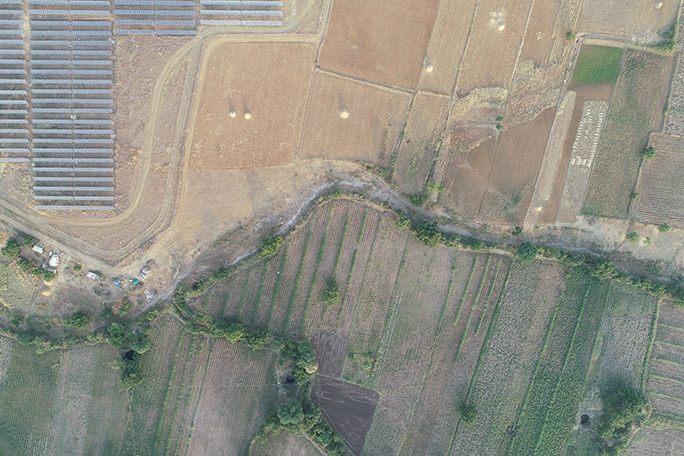
Nagpur district’s power map changed on July 16, when MSEDCL commissioned its first solar park at the 33/11-kV Kachari Sawanga substation in Katol taluka. The 4-MW facility is now supplying electricity directly to agricultural pump consumers across nine villages — Ridhora, Khapri Kutumba, Ghartwada, Gujar Khedi, Sabkund, Kokarda, Kachari Sawanga, Borkhedi and Panchdhar.
The shift matters most for timing. Farmers connected to the substation will now get eight hours of uninterrupted daytime power, ending the need to irrigate fields at night, a routine that has long been a source of hardship and safety risk for the 1,074 agricultural consumers in the area.
The project sits under Maharashtra’s Chief Minister Solar Agricultural Feeder 2.0 scheme, which is rolling out decentralised solar installations near substations statewide. MSEDCL provided the developer a 25-year land lease and signed a Power Purchase Agreement to buy the generated electricity for less than Rs 3 per unit, which is then routed to farmers under the state programme.
Officials pegged the investment at roughly Rs 10-12 crore for the 4-MW park, using MSEDCL’s standard cost estimate of Rs 2.5-3 crore per megawatt. The park was built by a private developer, with siting deliberately chosen near the substation to minimise transmission losses.
MSEDCL says the Kachari Sawanga installation is just the first of several solar parks now under development across Nagpur district as the utility works to widen daytime power access for agricultural consumers. Chief engineer Rajesh Naik led the project with superintending engineer Sanjay Wakde and executive engineers Narendra Katare and Narendra Dhawad.
Naik said the project is an important step toward dependable daytime electricity for farmers, while also supporting clean energy goals and strengthening the rural economy — a combination that has made substation-adjacent solar parks an increasingly common financing model for India’s state electricity distribution companies.
Wikimedia Commons/by Kanadaurlauber



Leave a Reply